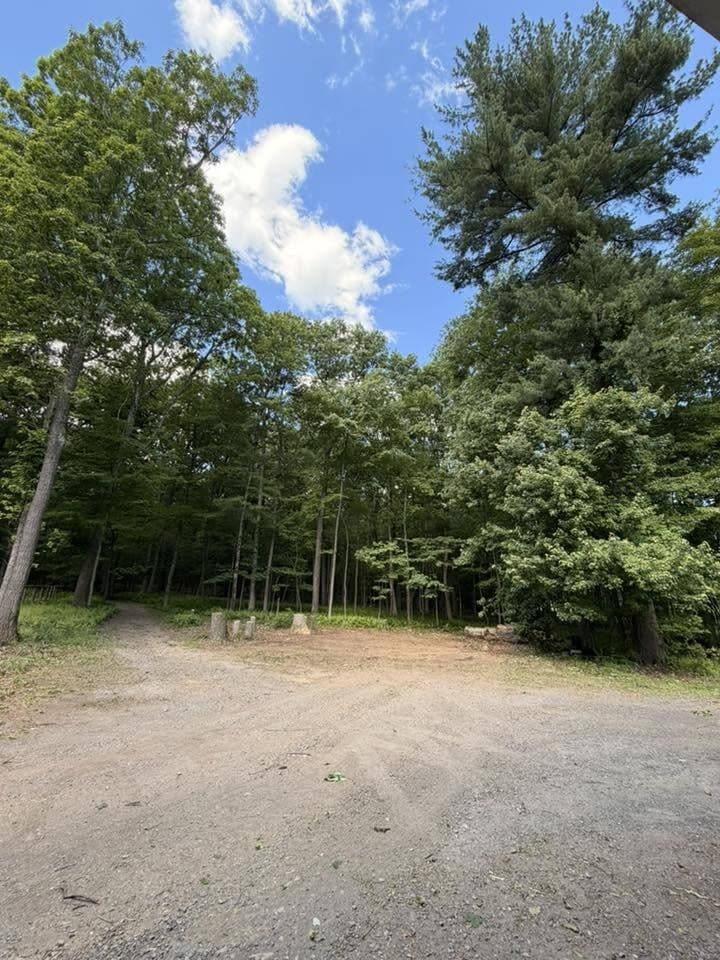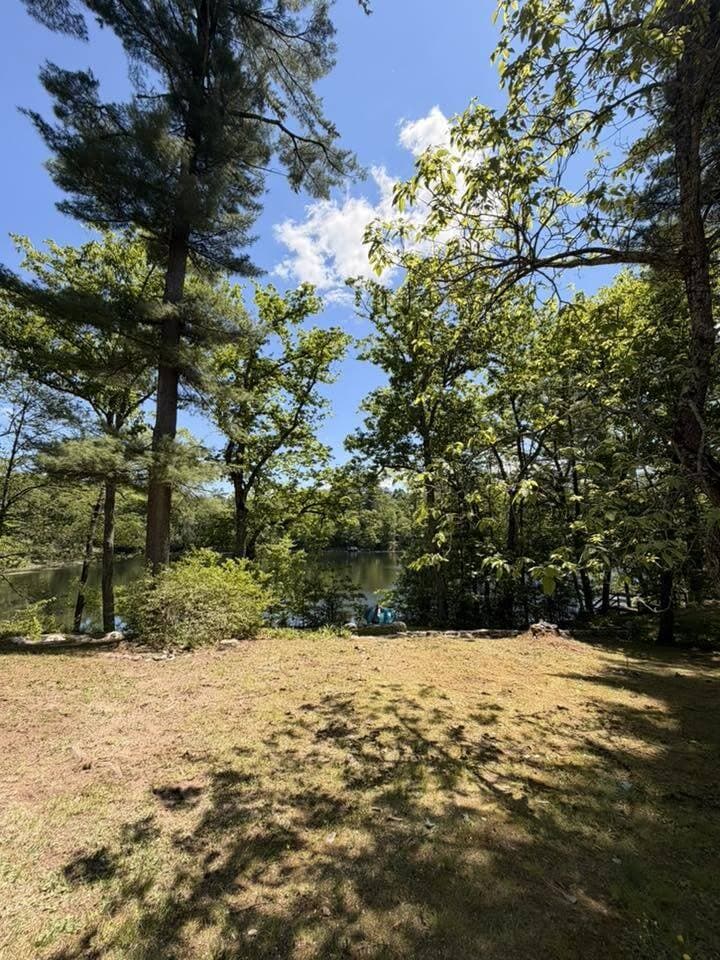
A trim job sounds straightforward. Cut some branches, clean up the canopy. But a trim done right — one that actually fixes the problem and keeps the tree healthy long-term — is a different thing than a trim done fast.
Gouger's Tree Care handles both kinds of requests, and they don't blur the line.
What People Actually Call About
Tree trimming requests in the Poconos usually fall into a few real categories:
The shaded driveway. You can't get your car in and out without scraping the roof. The branches have crept down over the years. Ryan's crew handles this with strategic lower-limb removal and canopy elevation — lifting the bottom of the canopy so light and clearance come back without taking the whole tree.
The roof and the gutter. Branches rubbing on a roof wear down shingles. Branches hanging directly over gutters fill them with debris every fall. Getting these back before they cause damage is the job.
Solar panels blocked. A few trees grew since the panels went in and now you're losing production. Directional pruning opens the canopy toward the sun without removing the whole tree — a real solution for a real problem.
The insurance letter. Your homeowners' insurance company sent a notice about trees too close to the house or power line. This is one of the more common calls Gouger's Tree Care gets. A recent job: a customer facing insurance pressure to trim and remove trees to maintain coverage. Ryan's crew trimmed them to a safe clearance and documented the work. Coverage was maintained, no trees had to come out that didn't need to.
Dead or storm-damaged limbs. A big limb that died over winter is a hazard. One good wind event and it comes down — on whatever happens to be underneath it. Removing hazard limbs before they choose their own landing spot is a lot cheaper than what comes after.
How the Work Gets Done
Ryan and the crew show up with bucket truck access for high canopy work and climbing capability for tight spots. They'll talk through the goal with you first — what's the problem you're trying to fix? — and then do the work to address that specific problem.
They don't trim more than the job calls for. Jacque Spencer said it plainly after her job: "Another person came to give us an estimate, and had his agenda. Ryan listened to what we asked, and accomplished our requests expertly and in a timely manner."
Cleanup is included. Branches and debris come out; your yard looks better than before they showed up.
When to Trim in Pennsylvania
For most trees, the dormant season — roughly late fall through late winter, before new growth pushes in spring — is the best time to prune. With the leaves down, the crew can read the branch structure clearly, the cuts close over cleanly, and the insects and diseases that travel through fresh wounds are inactive in the cold. Penn State Extension recommends winter as tree-pruning season for exactly these reasons.
A few things worth knowing:
- Oaks are the one to be careful with. Oaks should be pruned only in the cold months — roughly December through March — and not April through November. That warm-weather window is when the beetles that spread oak wilt are active, and a fresh cut is an open door. A hazard limb in summer is a different call; safety comes first. But for routine oak pruning, we wait for winter.
- Spring bloomers get pruned after they flower. Dogwood, redbud, lilac, and other spring-flowering trees set next year's buds early, so pruning them in winter cuts off the coming spring's blooms. Those get trimmed right after they finish flowering.
- Maples and birches "bleed" sap if pruned in late winter. It looks alarming but it's cosmetic — Penn State Extension notes it doesn't harm the tree.
- Dead, broken, or hazardous limbs come off any time of year. You don't wait for a season on a branch that's a safety risk, and insurance-compliance work gets done when it needs to get done.
If you're planning ahead for the tree's health, late winter is the window. If you've got a clearance problem or a hazard, call and we'll handle it when it needs handling.
Service Area
Gouger's Tree Care serves Saylorsburg and towns across Monroe County, Carbon County, and the Poconos. See all the areas we cover or call to confirm your address.
Get a Free Estimate
Call Ryan at (570) 620-7631 or send a message through the contact form. Every estimate is free — you'll get a real number before any work starts.
CALL US BECAUSE WE CARE!